-1.png?width=250&height=94&name=BeaconPoint%20Main%20(4)-1.png)
.png)
.png)

Tour operators often wonder which paid advertising platforms work best. The answer usually isn’t a single channel but a coordinated strategy that meets travelers at different moments in their research and booking journey. A balanced approach gives operators better visibility, stronger demand capture, and far more predictable revenue.
TL;DR Summary
-
Combine search intent channels with discovery channels for the strongest results.
-
Build a budget around peak season, shoulder season, and off season behavior.
-
Track revenue in a CRM connected to your ad accounts for real ROI.
-
Use remarketing across platforms to recover abandoned demand.
-
Protect your brand name from competitors and OTAs using brand search ads.
Why Multi Channel Matters for Tour Operators
Travelers rarely move in a straight line from discovering a tour to booking it. Most bounce between devices, platforms, and content types. Because the buying journey is scattered, a single distribution channel only captures a slice of potential demand. Tour operators who combine channels reach travelers earlier, stay visible longer, and convert them more effectively.
Industry research shows that most travelers begin planning with search engines or YouTube, while social platforms influence inspiration and early consideration. This combination is why multi channel strategies outperform platform reliance.
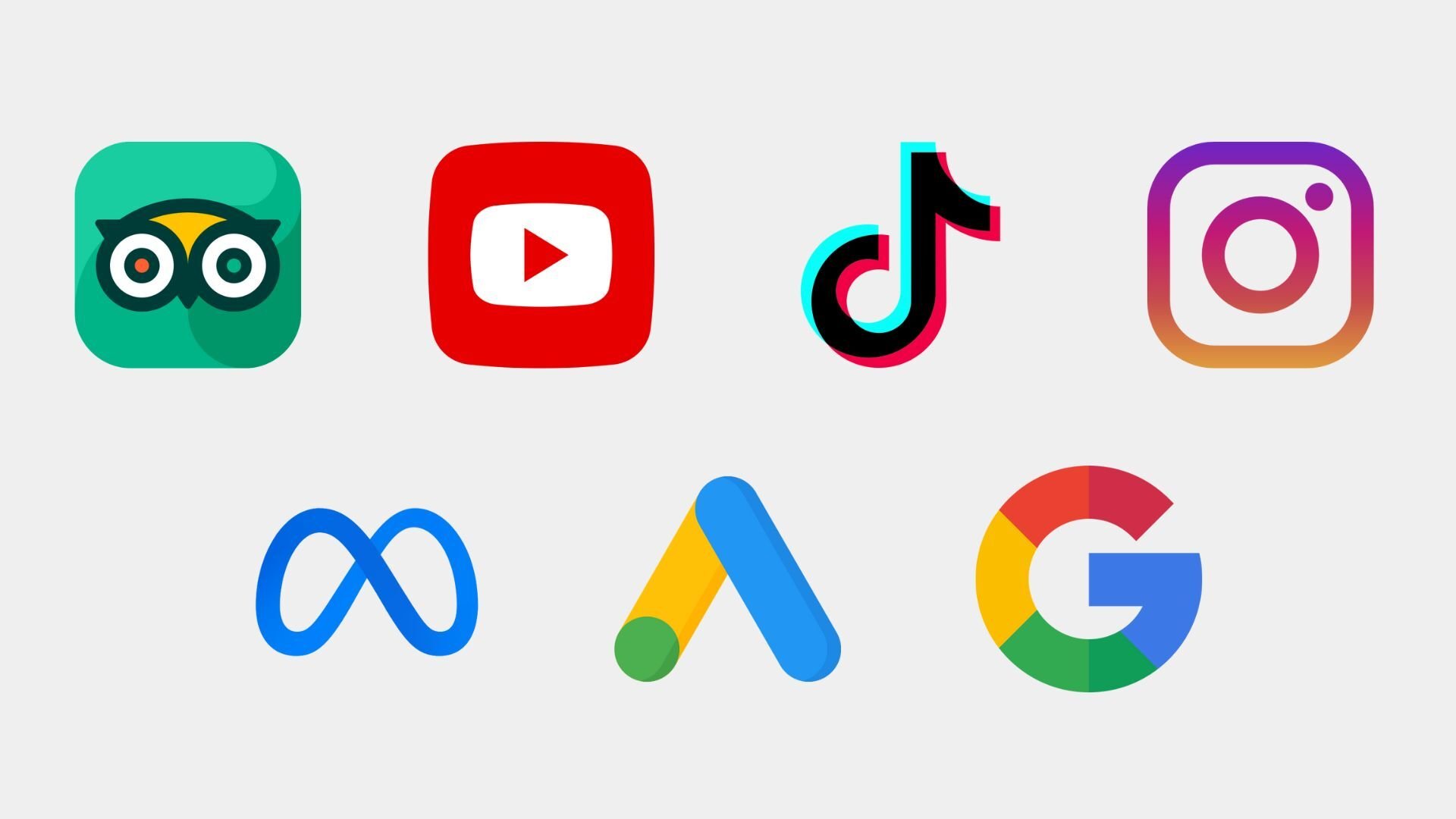
The Core Channels Every Tour Operator Should Consider
Google Search Ads for High Intent Buyers
Travelers searching terms like "wine tour near me" or "best things to do in Asheville" have immediate buying intent. These users are actively looking for options and comparing providers, which makes Google Search one of the most reliable ways to capture bookings from people who already know what they want to do.
Effective search campaigns go beyond simply appearing for a keyword. They rely on tightly structured ad groups, clear value propositions, competitive pricing, and strong review signals. Search also performs well when paired with landing pages built for fast decision making, since travelers often compare multiple tabs at once.
Search ads work best when:
-
The offer is clear and easy to understand.
-
There is strong local search demand for your activity or destination.
-
You compete with OTAs or other operators who bid on the same terms.
-
Your website loads quickly and shows reviews, pricing, and availability.
-
You maintain both non branded and branded search coverage to avoid losing demand to competitors or OTAs.
Google Things to Do Ads for Direct Booking Visibility
Google Things to Do gives tour operators a prominent placement on Google surfaces connected to travel planning, including Search, Maps, and the Things to Do module. This format showcases your tour listings with pricing, photos, descriptions, and real time availability.
Things to Do works well for operators that want to:
-
Increase visibility without relying fully on OTAs.
-
Display direct booking links alongside OTA listings.
-
Reach travelers comparing activities inside Google’s travel ecosystem.
-
Show accurate pricing and availability directly from their booking system.
Meta Ads for Discovery and Retargeting
Meta platforms influence travelers long before they pick a specific activity. These ads shape early inspiration, build familiarity with your brand, and re-engage travelers who have already shown interest. Meta works best when the creative mirrors what travelers want to feel rather than what the tour operator wants to explain. High performing campaigns often use visual storytelling, authentic guest footage, and simple headlines that create emotional context.
These ads support both discovery and conversion because Meta’s algorithms identify people who resemble past bookers, website visitors, and high intent engagers. This makes Meta valuable even when a traveler is not ready to book yet.
Common Meta uses include:
-
Awareness campaigns for new or seasonal tours.
-
Carousel ads showcasing itinerary highlights, food stops, or scenery.
-
Short videos that demonstrate the experience in action.
-
Retargeting website visitors or add to cart users with strong calls to action.
-
Audience building for future campaigns using lookalike modeling.
Instagram and TikTok for Inspiration
Short form discovery content shapes traveler expectations. These channels set the emotional tone for what a traveler believes a place or experience should feel like. Instagram and TikTok are where travelers get inspired, save ideas, follow local creators, and form their first impressions of a destination. Their influence is strongest for visually rich experiences, making them ideal for operators who can showcase scenery, movement, or sensory details through high quality short form video.
These platforms reward authenticity, fast pacing, and storytelling. Videos that show real guests having fun, behind the scenes footage, guides interacting naturally, or quick highlight moments often outperform polished commercial style ads. Operators who post consistently benefit from algorithmic momentum, which helps keep their brand in front of travelers throughout the trip planning cycle.
Use these channels when the tour:
-
Has strong visual appeal that translates well into video clips or reels.
-
Benefits from storytelling that shows what the guest experience actually feels like.
-
Targets younger demographics or travelers who favor mobile based decision making.
-
Offers moments of surprise, humor, beauty, or excitement that perform well in short form formats.
-
Needs to build brand recognition before running retargeting or conversion campaigns.
YouTube for Awareness and Consideration
YouTube performs really well for tours with a story to tell, such as historical tours, adventure tours, or destination based experiences. Travelers often use YouTube to preview what an activity feels like before committing, which makes it a powerful platform for longer form storytelling and emotional connection. Because YouTube functions as both a search engine and a content discovery platform, your videos can reach people actively researching as well as those casually browsing destination ideas.
Strong performance on YouTube often comes from videos that highlight movement, scenery, and authentic guest reactions. Educational content also works well, especially for operators offering cultural, historical, or niche experiences. A well optimized video can continue generating views for months, giving YouTube a longer shelf life than most social media videos.
Examples of effective videos:
-
Tour walkthroughs that show the flow and feel of the experience.
-
Behind the scenes stories featuring guides, preparation, or local insights.
-
Customer testimonial videos with genuine reactions and guest commentary.
-
Highlight reels showing scenery, food moments, or adventure scenes.
-
FAQ style videos that answer common questions and reduce booking hesitation.
OTA Ads for Additional Visibility
OTAs reduce margin, but they offer immediate visibility to travelers who prefer booking through large marketplaces. For new operators with limited budgets, OTAs can act as a powerful jumpstart by providing built in demand, credibility, and traffic you may not yet be able to generate on your own.
However, relying too heavily on OTAs can become a trap later on. As your business grows, the high commission rates reduce long term profitability and make it difficult to shift customers toward direct booking. Operators who stay dependent on OTAs often struggle to build brand recognition, keep repeat customers, or control their booking pipeline.
Paid placements inside OTAs can still be useful in competitive markets, but they work best when paired with a strategy to gradually transition travelers to direct channels over time.
How These Channels Work Together
Travelers move between inspiration, search, research, and booking. A multi channel plan ensures you are present at every stage.
| Funnel Stage | Traveler Behavior | Best Channels |
|---|---|---|
| Inspiration | Looking for ideas, browsing destinations | Instagram, TikTok, YouTube |
| Consideration | Comparing tours and reading reviews | Meta, YouTube retargeting |
| Intent | Searching for specific tours | Google Search, LSAs |
| Decision | Evaluating final options | Meta retargeting, Search brand campaigns |
A balanced plan moves travelers through these phases and increases conversions.
How to Set a Smart Advertising Budget
Tour demand is seasonal, and a strong advertising budget reflects how travelers behave throughout the year. Instead of setting one fixed monthly spend, smart operators adjust budgets to match real demand curves, capacity trends, and booking windows. This avoids wasting money in slow periods and ensures you’re fully visible when travelers are actively searching and ready to book.
Consider budgeting for:
-
Peak season: highest spend to capitalize on demand when booking volume is naturally strong. This is when most operators should allocate the largest share of their annual ad budget.
-
Shoulder season: moderate spend for steady bookings, with a mix of intent and discovery channels to maintain visibility.
-
Off season: awareness and retargeting at lower spend, keeping your brand top of mind for future travelers without overspending during low demand.
Budget should also be tied to capacity. If tours consistently fill weeks in advance, shift spending toward discovery and brand building channels to expand total demand. If capacity is unpredictable, prioritize intent channels that capture buyers ready to book now.
Smart operators also evaluate booking windows. For example, a market with long lead times may require spending earlier in the season, while last minute markets may benefit from ramped up short term campaigns. Ultimately, a flexible, season aware budget prevents overspending during slow periods and maximizes revenue during high opportunity windows.
Frequently Asked Questions
What is the most effective paid ads platform for tour operators?
The most effective platform depends on the goal. Google Search captures high intent buyers, while Meta and Instagram influence earlier stages of discovery and consideration.
How much should a tour operator spend on ads?
Budgets vary by market size and season. A common approach is to invest more during peak demand periods and reduce spend during slow months while keeping retargeting active.
Do brand search ads matter for tour operators?
Brand ads help protect your business name from OTAs and competitors bidding on your branded keywords. They also improve overall booking efficiency.
How can I track ROI from my ads?
Use a CRM connected directly to your ad platforms. This lets you measure revenue, cost per booking, and lead quality.
Should I use video ads for tours?
Video performs well for visually appealing experiences or tours that benefit from storytelling. It works especially well on Instagram, TikTok, and YouTube.
Key Takeaways
-
Multi channel strategies consistently outperform single channel approaches.
-
Search ads capture high intent; social ads influence early interest.
-
Seasonal budgeting and capacity forecasting improve profitability.
-
Video and retargeting help close the gap between interest and booking.
-
CRM connected revenue tracking is essential for measuring true ROI.