-1.png?width=250&height=94&name=BeaconPoint%20Main%20(4)-1.png)
.png)
.png)

Backlinks play a major role in SEO for tour operators and whether their business appears on page one of Google and in AI search results. Search engines use backlinks as signals of credibility, authority, and trust. The more high-quality sites that reference your business, the more likely Google is to rank your pages above competitors.
For tourism brands, this matters because most customers begin their journey with discovery searches like "things to do in Asheville," "best food tours in NYC," or "hiking tours near me." Strong backlink profiles help you appear in those results and influence placement in generative AI overviews.
TL;DR Summary
-
High-quality backlinks increase search visibility, authority, and trust.
-
Tourism businesses should focus on relevance, authority, and local-intent links.
-
Best tactics include guest posts, press mentions, partnerships, and itinerary placements.
-
Avoid spammy link buying, irrelevant directories, and mass-produced backlinks.
-
Track link quality, referral traffic, and changes in keyword rankings to measure impact.
How Backlinks Influence Tourism SEO Performance
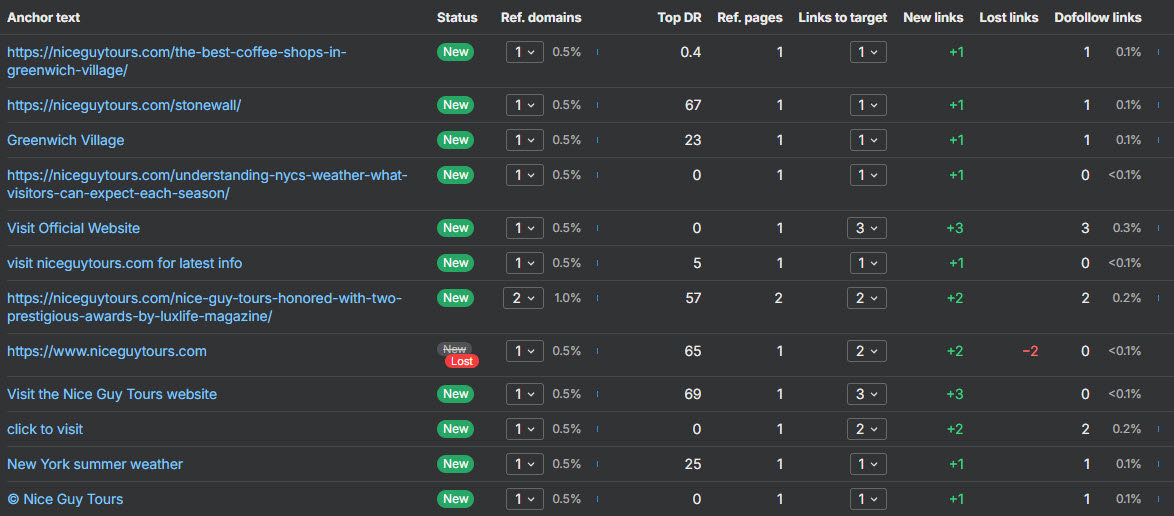
Backlinks are more than simple website references. They operate as trust signals that help search engines understand which tourism businesses are credible, relevant, and worth recommending to travelers. For tour operators competing in crowded destinations, backlinks directly influence visibility by strengthening the authority and topical clarity of your website. Strong backlink profiles help search engines connect your business to your location, your niche, and your expertise, which supports both organic rankings and E-E-A-T. This section explains how backlinks shape your overall search performance and why they remain one of the most powerful levers for long term growth.
What Backlinks Tell Search Engines
Search engines treat backlinks as recommendations that help determine credibility, trust, and topical relevance. When a trusted site links to a tour company, it signals that the business is noteworthy, legitimate, and valuable. These links also reinforce key elements of Google's E-E-A-T framework: Experience, Expertise, Authoritativeness, and Trustworthiness. A strong backlink profile shows search engines that your business is recognized by reputable sources in your destination or niche.
Search engines consider three primary factors:
1. Relevance
Links from travel, tourism, local business, or hospitality websites hold more value than random or off-topic links because they reinforce your topical alignment and industry expertise.
2. Authority
A link from Lonely Planet or the city's tourism board carries more weight than one from a generic directory since authoritative websites strengthen the E-E-A-T signals search engines use to determine whether your content can be trusted.
3. Placement
Links inside editorial content (articles, reviews, guides) tend to perform better than footer links or low-quality directory submissions because they show genuine endorsement and real contextual value.
Types of Backlinks that Benefit Tour Operators Most
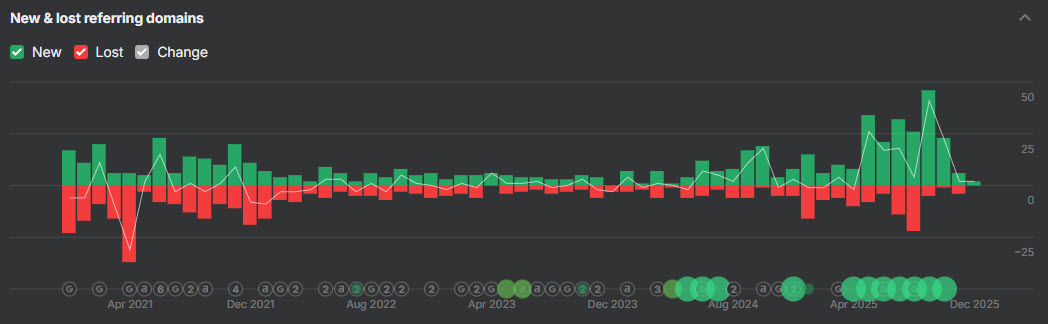
Tour operators exist in a highly competitive search environment where Google and AI-driven models prioritize trusted, authoritative, and contextually relevant sources. Categorizing backlinks helps businesses focus on the types of links that contribute most to long term visibility and E-E-A-T strength. These categories of backlinks represent the sources that consistently influence rankings, improve brand authority, and support the signals search engines look for when evaluating whether your business is a credible leader in your destination or niche.
Editorial Links
Editorial links are among the most valuable backlinks a tourism business can earn because they come from content that is written, curated, or reviewed by a third party. These links typically appear in articles, guides, recommendations, or expert roundups where the writer has intentionally chosen to feature a business due to its relevance or quality. This makes them powerful authority signals because they demonstrate that your tours are noteworthy enough for someone else to highlight.
These links also strengthen E-E-A-T by indicating that your business is recognized within trusted travel content. When editorial sites include your tours in curated lists or experiential guides, search engines see it as validation that real people have evaluated and referenced your offering.
Editorial links often appear in formats such as:
-
reviews
-
feature articles
-
local travel guides
-
listicles
-
expert-curated roundups
-
itineraries
Examples of where editorial links might appear:
-
"Best Kayak Tours in Colorado"
-
"Top 10 Things to Do in Charleston"
There's also growing evidence that branded links, especially those from editorial sources, positively influence a brand's visibility in AI recommendations.
Local Authority Links
Local authority links are especially powerful for tour and activity businesses because they combine two high value signals that search engines look for: geographic relevance and institutional trust. When a tourism business appears on well regarded local sites, it reinforces its legitimacy within the destination and strengthens both local SEO performance and E-E-A-T signals. These links help validate that your business is known, recognized, and engaged within the community it serves.
Strong local authority links are influential because they:
-
support rankings for location based searches such as "tours near me" or "things to do in [city]"
-
demonstrate real world presence and trustworthiness
-
show alignment with official or well respected local sources
-
boost visibility in both maps and organic search results
Common sources include:
-
Chamber of commerce sites, often featuring trusted local businesses
-
City tourism boards that highlight activities, attractions, and visitor resources
-
Local magazines and news outlets that cover events, openings, and local guides
-
Event calendars that regularly link to participating businesses and activities
Travel Websites and Tourism Platforms
Travel and tourism platforms represent some of the most naturally aligned and contextually relevant backlink sources for tour operators. These sites specialize in destinations, activities, hospitality, and guest experiences, which makes their links especially valuable for reinforcing topical authority and E-E-A-T. Because these platforms already operate within the tourism ecosystem, links from them send clear signals that your business is part of the legitimate travel landscape.
Backlinks from tourism platforms are powerful because they:
-
align directly with travel intent and visitor behavior
-
help search engines understand the niche and focus of your business
-
reinforce your credibility through association with established travel content
-
often send qualified referral traffic from people actively planning trips
These links commonly appear in curated lists, experience roundups, destination landing pages, and partner recommendation sections. Many of these platforms also have strong domain authority due to large content libraries and long term publishing history.
Examples of high value tourism platform sources include:
-
Travel blogs that highlight experiences, guides, and itineraries
-
Adventure tourism websites covering outdoor recreation, gear, and expert advice
-
Hospitality sites that recommend local activities to enhance guest stays
-
Regional tourism associations that promote operators within their destination
Partnership and Vendor Links
Partnership and vendor links are some of the most overlooked yet highest converting backlink opportunities for tour operators. These links come from businesses that interact with travelers before, during, or after they take part in your experience. Because these organizations already serve the same audience, their endorsements are naturally relevant, highly trusted, and closely aligned with real traveler intent.
These partnerships strengthen your E-E-A-T profile by showing that other reputable businesses recognize your tours as reliable, safe, and valuable. When a hotel concierge, local attraction, or guide service links to your website, it signals to search engines that your business is integrated into the local visitor economy.
Partnership links are powerful because they:
-
put your business in front of travelers at key decision making stages
-
generate consistent referral traffic from high intent visitors
-
demonstrate local reputation and professional credibility
-
often lead to long term link stability, unlike short term press mentions
Typical vendor and partner sources include:
-
hotels that recommend your tours as guest experiences
-
B&Bs featuring local activities on visitor resource pages
-
shuttle services linking to tours that pair well with transportation
-
local attractions cross promoting complementary experiences
-
guides and educators who collaborate on specialized or niche tours
-
DMCs and concierges who curate activities for groups and travelers
Link-Building Strategies for Tourism Businesses
Effective link building for tourism brands requires a blend of creativity, consistency, and relationship building. Unlike generic industries, tour operators benefit from strategies that tap into local networks, travel publications, hospitality partners, and visitor resources. These strategies work because they align with real traveler behavior and reinforce the EEAT signals that search engines look for when determining whether your business should appear in top results. The following methods represent the most reliable and sustainable ways for tourism businesses to earn high quality backlinks that support long term visibility.
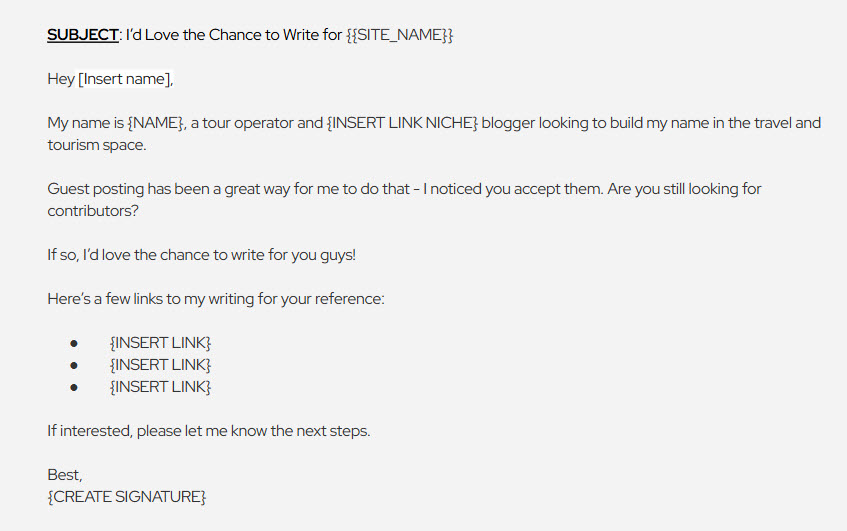
Guest Posting on Travel Blogs
Guest posting is one of the most dependable and high value link building strategies for tour operators because it places your expertise directly in front of audiences who are already interested in travel, experiences, and destination planning. Travel blogs hold strong influence in search results due to their consistent publishing, niche authority, and the fact that readers actively seek recommendations and insights. When you contribute guest articles, you gain both a high quality backlink and exposure to travelers who may convert into customers.
High quality guest posts also strengthen E-E-A-T by showcasing your first hand experience, your expertise in your location or activity niche, and your ability to provide helpful insights. Search engines respond positively to content that demonstrates deep knowledge of a destination or activity, making these articles beneficial for both authority and rankings.
Strong guest posts typically provide useful, memorable, or practical information that fits naturally within the blog's audience interests. This makes your contribution valuable to readers and increases the likelihood that the blog owner will welcome future collaborations.
What to pitch:
-
insider tips that draw from your real world experience guiding guests
-
seasonal travel guides tied to weather, holidays, or annual events
-
how to content that helps travelers plan or prepare
-
safety or planning advice for specific adventure or outdoor activities
-
local recommendations backed by your expertise as someone who lives and works in the destination
Earning Press Mentions
Local and national media remain some of the strongest and most influential backlink sources available to tour operators. Press mentions carry exceptional weight because journalists operate with a high editorial standard, which makes these links powerful indicators of credibility, authority, and trust. When a reputable outlet highlights your business, it reinforces E-E-A-T by demonstrating that knowledgeable third parties consider your tours worth covering.
Media backlinks also tend to attract significant referral traffic, especially when coverage aligns with trending topics, seasonal travel interest, or major events. Beyond SEO, press features often lead to increased brand awareness, social proof, and long term recognition across your destination.
Ways to secure coverage:
-
share unique stories, charity work, or milestones that stand out to local reporters
-
pitch new tour launches and explain what makes them newsworthy or timely
-
provide commentary on local tourism trends or visitor behavior as a subject matter expert
-
offer expert quotes to journalists through platforms where reporters seek sources
Partnerships with Hotels and Local Businesses
Partnering with hotels and local businesses is one of the most reliable and mutually beneficial link building strategies for tour operators. These relationships naturally align with the customer journey because travelers often rely on accommodations, transportation providers, and attractions for trustworthy recommendations. When these businesses link to your website, search engines view it as a strong indicator that your tours are actively recommended within the local tourism ecosystem.
These partnerships also strengthen E-E-A-T by demonstrating real credibility and community integration. Hotels, inns, and partner businesses act as real world validators, showing that your tours are not only legitimate but also valued by other reputable service providers in your destination. Because these links come from businesses that interact with visitors daily, they often produce steady referral traffic as well.
Strong partnership backlinks typically come from:
-
curated guest resource pages on hotel websites
-
concierge recommendation lists
-
partner featured sections on local attraction or vendor sites
-
co-marketing campaigns that promote joint offers or seasonal experiences
-
itinerary pages that highlight complementary activities
Examples:
-
"Where to Stay + What to Do" guides
-
preferred partner lists
-
cross-recommendation pages
-
co-branded itineraries
Examples:
-
"Where to Stay + What to Do" guides
-
preferred partner lists
-
cross-recommendation pages
-
co-branded itineraries
Sponsoring Local Events and Organizations
Sponsoring local events and organizations is one of the most authentic ways for tour operators to earn high quality backlinks while simultaneously strengthening their presence in the community. These links are valuable because they typically come from reputable event hosts, nonprofits, chambers, and civic associations that already have strong domain authority and local trust. When your business appears on these sites, it signals to search engines that you are an engaged and credible part of the local tourism ecosystem.
Sponsorship backlinks also enhance E-E-A-T by demonstrating real world involvement and positive brand reputation. Event hosts and community organizations often include sponsor logos, business descriptions, and direct website links, all of which provide meaningful context and visibility. Unlike short term digital tactics, these partnerships often lead to long lived links that continue driving SEO value long after the event ends.
Sponsorship opportunities often include:
-
festivals that feature sponsors on their websites and promotional materials
-
chambers of commerce events that highlight member businesses
-
charity events that list supporters and community partners
-
farmers markets with vendor and sponsor pages
-
marathons and outdoor events that include local business sponsors
-
tourism association events that promote participating operators
Creating Linkable Content
Creating linkable content is one of the most sustainable and long term backlink strategies for tour operators because it gives other websites a genuine reason to reference, cite, or share your material. Unlike outreach dependent methods, linkable content naturally attracts links over time by providing value that travelers, bloggers, journalists, and even local organizations want to pass along to their own audiences. This approach also contributes meaningfully to E-E-A-T signals, since well researched, helpful, and experience based content demonstrates your authority and expertise in your destination.
The most effective linkable content is practical, evergreen, and easy for other creators to include in their guides, lists, and resources. It should solve problems, answer questions, or provide information that enhances the traveler experience. When crafted well, these assets become go to references that consistently earn organic backlinks.
Popular forms of linkable content for tourism businesses include:
-
seasonal travel guides that help visitors plan around weather, events, and peak seasons
-
local itineraries covering different traveler types such as families, couples, or adventure seekers
-
packing lists tailored to climate, terrain, or activity type
-
history or culture content that adds depth and context to the destination experience
-
safety checklists, especially for adventure or outdoor tour companies
-
family friendly activity guides that help parents plan stress free, kid focused trips
Comparison Table of Strong vs Weak Link Types
| Link Source Type | Strength | Why It Matters |
|---|---|---|
| Local news, city tourism boards | High | Strong authority, trusted by search engines |
| Travel blogs with real audiences | High | Relevant, editorial context |
| Hotel partner links | Medium High | Local relevance and partnership credibility |
| Generic business directories | Low | Minimal authority and often duplicated |
| Paid links or private blog networks | Very Low | Risk of penalties and reduced trust |
Mistakes That Hold Tourism Websites Back
Mistakes in link building can quietly undermine a tourism business’s visibility, even when other parts of the marketing strategy are strong. Search engines pay close attention to link patterns, relevance, and authenticity. When a website appears to be manipulating links or relying on low quality sources, it weakens E-E-A-T signals and makes it harder to rank for competitive travel and activity related searches. The following issues are the most common reasons tourism businesses struggle to gain traction with link building.
Buying Backlinks
Search engines can detect unnatural link patterns, especially when links come from unrelated websites, low quality blogs, or networks that publish templated content. Paid links often look artificial because they appear in irrelevant contexts or on websites that do not align with your industry. For tour operators, this not only risks weakening rankings, but also damages credibility in the eyes of users who recognize spammy sources.
Over relying on Directories
A few reputable directories can help travelers discover your business, but many directories offer little or no authority value. Excessive directory submissions create an unnatural link profile that lacks relevance and context. Tourism businesses benefit far more from editorial, local, and hospitality based links than from listing heavy strategies.
Ignoring Local SEO Links
Missing local citations hurts visibility for searches like "things to do near me" and destination specific keywords. Local SEO links validate that your business is physically present and active in your community. When these links are missing, Google has less confidence in ranking your pages for geographic intent queries.
Targeting High Volume Instead of High Relevance
Some operators focus on accumulating as many links as possible, but high volume from irrelevant or low authority websites does little to improve rankings. Twenty links from hospitality sites, local partners, and trusted travel publications outperform hundreds from random blogs because they reinforce topical authority and a trustworthy link profile.
Measuring Link Building Success
Measuring the impact of link building is essential for understanding which strategies are working, where new opportunities exist, and how search engines are responding to your growing authority. Because link building influences both direct traffic and long term visibility, tourism businesses should evaluate performance using a mix of SEO metrics, behavioral data, and quality indicators. These measurements also contribute to stronger E-E-A-T signals by showing that your website is attracting legitimate attention, recognition, and engagement from reputable sources.
Referring Domains
The number of unique websites linking to your domain is one of the strongest indicators of overall authority growth. A steady increase in referring domains usually reflects healthy, natural link acquisition. Tour operators should prioritize growth in relevant, tourism aligned domains rather than volume from unrelated sites.
Domain Authority Indicators
Tools like Moz, Ahrefs, and SEMrush provide measurements such as Domain Authority, Domain Rating, or Authority Score. While these are not used directly by search engines, they offer helpful third party benchmarks for evaluating how your site compares to competitors and how your authority improves as you earn more high quality backlinks.
Referral Traffic
Referral traffic helps you determine which links are actively sending visitors to your site. For tourism businesses, these traffic sources often come from hotels, travel blogs, tourism boards, and event sites. High intent visitors that arrive through referral links tend to convert at higher rates because they are already in a planning mindset.
Keyword Performance
Stronger backlinks typically correlate with improved ranking positions for destination based keywords, tour category terms, and long tail search queries. Tracking changes in keyword performance helps you understand which pages benefit most from new links and where additional link building may be needed. Over time, consistent link acquisition can lead to visibility gains across an entire category or region.
Frequently Asked Questions
What is the best link building strategy for small tour operators?
For most small tour operators, the strongest and most attainable strategy is building partnerships with local hotels, attractions, and hospitality businesses. These links tend to be the most relevant because they come from organizations that directly influence traveler decisions. They also help reinforce your local reputation and EEAT signals by demonstrating that trusted businesses in your destination recognize and recommend your tours.
Do backlinks still matter with AI search results?
Yes. Even as AI search evolves, backlinks remain one of the clearest indicators of authority and trust. AI models favor sources with a strong footprint of credible, high quality links because those sites are more likely to offer accurate, experience based information. Well earned backlinks increase your chances of appearing in AI generated summaries, overviews, and travel recommendations.
How long does it take to see results?
It typically takes around 2 to 4 months to notice measurable improvements from new backlinks, though this varies based on your competition, link quality, and existing authority. High authority editorial links or tourism board features can accelerate results, while low relevance links may show little impact. Consistency is more important than speed.
Are directory links worth it?
Directory links can still be helpful, but only when they come from reputable, travel relevant, or local authority directories. Most generic directories add little value and do not contribute meaningfully to rankings. A small, curated set of trusted directories can support local SEO, but they should never replace editorial, partner, or tourism based link strategies.
Can I build backlinks without outreach?
Yes, though results grow more slowly. Creating useful, linkable content such as guides, itineraries, and checklists can attract natural links over time. Strong partnerships with hotels, attractions, and community organizations can also generate links without heavy outreach. However, combining natural link earning with light strategic outreach typically produces the best long term results.
How many backlinks do I need?
There is no universal number, because the right amount depends on your destination, niche, and competitor landscape. In general, you should aim to match or exceed the number of referring domains held by the top ranking tour operators in your city or category. Quality and relevance matter more than sheer volume. A small handful of high authority links can outperform dozens of low value ones.
Key Takeaways
-
Backlinks improve authority, rankings, and visibility.
-
Local links and partnerships produce the strongest ROI.
-
Avoid spammy or irrelevant link tactics.
-
Track domains, rankings, and referral traffic to measure performance.
-
Link building is ongoing and benefits from consistency.
.jpg?width=352&name=search-find-view-information-data-graphic-symbol-icon%20(1).jpg)